
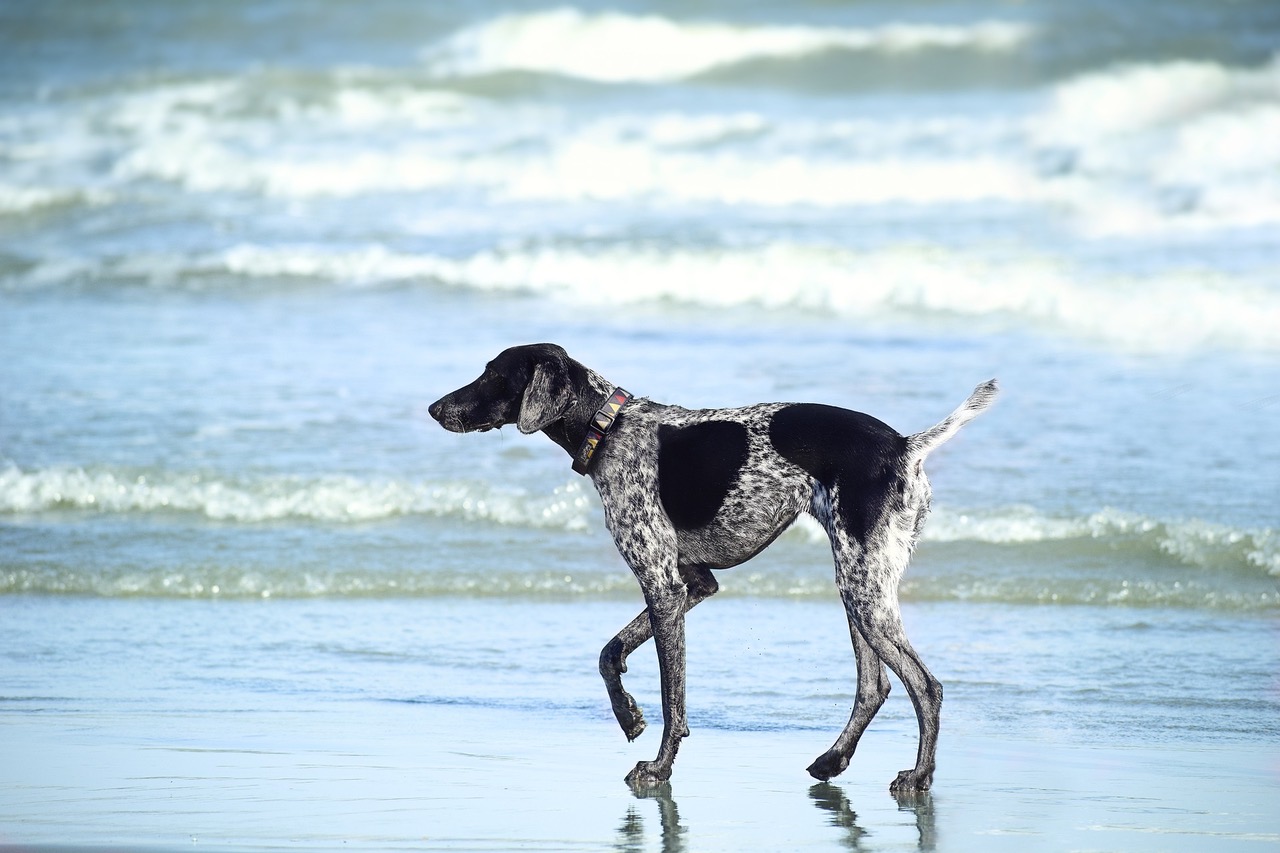
We at P&A are known to be big animal and especially dog lovers. In this respect, many of you have already met our beloved dog Valletta or have even been to our office with your dog.
As we are sure you enjoy taking your dog with you on your travels just as much as we do, we have listed the entry requirements for your dog to the most popular vacation destinations in Europe for you here:
If the dog is to be taken along on a trip to an EU country, certain requirements must be met.
Within the EU, a dog must meet the following uniform requirements:
- The dog must be chipped,
- an EU pet passport and
- have a valid rabies vacc ination. According to EU Regulation 998/2003, the rabies vaccination is also recognized as valid for three years. The vaccination is valid if it is at least 21 days old.
Within individual European or EU countries, however, special regulations now apply to dogs. There may be distinctions according to breed or general regulations and obligations for dog owners. The country-specific peculiarities are outlined below.
Spain: When entering Spain, the general requirements of the EU must first be observed. In addition, a maximum of five dogs per person may be imported and no commercial purposes may be pursued. When entering the country by car, it should be noted that there is an obligation to secure dogs: The transportation of dogs in cars in Spain is only permitted in transport boxes or with a sturdy partition. In principle, all dog breeds are allowed to enter Spain. However, different regulations apply to dog breeds classified as potentially dangerous depending on the province, which can also mean a ban on entry in individual cases. The following breeds are considered potentially dangerous: Pit Bull Terrier, Staffordshire Terrier, American Staffordshire Terrier, Rottweiler, Dogo Argentino, Fila Brasiliero, Tosa-Inú and Akita-Inú. In addition, dogs that meet certain external characteristics and are therefore similar to the breeds mentioned can also fall under the special rules. Young dogs under 15 weeks old are not permitted to enter the country. This is because puppies are also only allowed to enter the country if they have been sufficiently vaccinated against rabies. As the first rabies vaccination may only be carried out at the age of 12 weeks at the earliest and it then takes a further 21 days for effective vaccination protection to develop, puppies may only enter or transit the country at the age of 15 weeks at the earliest.
Whether a leash is compulsory in public areas is regulated regionally. There is no general obligation to wear a muzzle. However, this may be different due to local regulations on certain dog breeds or depending on the situation. For safety reasons, a muzzle should be carried, even if the dog will not have to wear it in most situations.
France: Here, a distinction is made according to the breed if it is a "dangerous" dog. This is divided into two categories. Typical fighting dog breeds are assigned to category 1. France prohibits these dogs in the first category from entering the country as well as passing through (!). It should be noted that dogs that are similar to these breeds also belong to this category.
However, these dogs may enter and pass through if they can be assigned to the 2nd category. This is possible if the dog is registered in a pedigree book approved by the International Kennel Club. Rottweilers and dogs whose morphological characteristics are comparable to the Rottweiler breed belong to the 2nd category even without proof of pedigree. Numerous conditions are attached to the transportation of dogs in this 2nd category, making it almost impossible for them to stay in France even for a short time. Dog and owner must pass a suitability test and a behavioral assessment and also apply for an ownership permit. However, this permit can only be issued if the dog is resident in France.
Dogs of the breeds and not type Dobermann, Great Dane and Staffordshire Bull Terrier do not belong to either category. Import is therefore permitted. It is recommended that the dog wears a muzzle and is only kept on a lead by a person of legal age. In general, caution is advised if your own dog is similar to dogs in this category. In such a case, a veterinary certificate confirming that the dog does not belong to any of these categories should be carried as a precaution. This certificate should be as detailed and comprehensible as possible for the French authorities so that there are no misunderstandings. Without this certificate or in the case of an untruthful certificate, criminal sanctions are to be expected. These can even lead to the confiscation of the dog.
Italy: Entry and transit is possible if the basic requirements are met. Within the country, there are some special requirements to be observed. If the dog travels in the car, it must be ensured that the driver is not hindered. The dog should therefore be placed in a dog crate or at least secured by a net. In general, a leash is compulsory, which must not be longer than 1.5 m, and a muzzle should be carried. However, a muzzle is only compulsory on public transport and in public authorities. While liability insurance was mandatory for dogs before 2009, this is no longer required. Nevertheless, the owner's liability for damage caused by the dog still applies, so dog liability insurance is recommended in any case.
Austria, Slovenia: In addition to the basic requirements, the dog owner should have a leash and, if necessary, a muzzle with them. The leash requirement applies in all public places (streets, squares, freely accessible parts of houses and courtyards, restaurants, etc.), public transportation and public authorities. In Austria, dogs with a bite must be muzzled in these places. In Slovenia, muzzling is generally compulsory on public transport.
Germany: Only when entering Germany from a non-EU country must a document check or identity check be carried out in addition to the basic requirements. This is done by registering the dog with German customs. This is not necessary when entering the country from Switzerland.
In general, the import of certain dog breeds is prohibited if they have been classified as dangerous. This is regulated by the so-called Dog Movement and Import Restriction Act. Accordingly, pit bull terriers, American Staffordshire terriers, Staffordshire bull terriers, bull terriers and all crossbreeds with each other or with other breeds are excluded from importation. Dogs classified as dangerous may nevertheless be imported if an exceptional case exists. Such an exceptional case exists for all dogs that are not mere pets. This includes typical service dogs, guide dogs or rescue/search dogs. In general, all "service dogs". On the other hand, dangerous dogs can be carried if the owner and therefore the dog are not staying in Germany for longer than four weeks. This applies in particular to tourist traffic. The required documents must be presented for both exceptions. These include proof of parentage, a character test certificate and other certificates from the responsible public order office. But also those papers that can prove the intended purpose or the harmlessness of the dog. These documents must be presented in the original and must have a certified German translation if they are written in a foreign language.
Belgium, Netherlands, Portugal, Luxembourg, Liechtenstein: There are no requirements other than the basic requirements. Only in the Netherlands must it be ensured that the dog is not a prohibited breed.
Switzerland: Although Switzerland is not directly part of the EU, the basic requirements apply. It should be noted that the first vaccination against rabies must not have taken place before the microchip is attached in order to ensure that the dog can be clearly identified. In addition, an animal health certificate must be presented, in which the valid vaccination protection must be proven. Furthermore, the dog may only travel accompanied by a responsible person, who must submit a written declaration stating that the dog will not Sold or generally be transferred to another owner. A sample declaration can be downloaded online.
The dog may only be imported directly. If unlisted third countries are passed through during transportation, the owner or the person accompanying the dog must submit a self-declaration. This must confirm that the dog has had no contact with animals susceptible to rabies during transit and that the dog has not left the means of transport or the airport.
The import of dogs with docked ears and/or tails is generally prohibited. An exception to this is only made if owners living abroad come to Switzerland with their dog for vacation or short stays or move to Switzerland.
England: The basic requirements still apply after Brexit, but there are some changes. Dogs of the Pit Bull Terrier, Japanese Tosa, Dogo Argentino and Fila Brazilier breeds are prohibited. The EU pet passport is recognized, whereby the rabies vaccination, the microchip and also the tapeworm treatment (!) must be entered in it. The tapeworm treatment must have been carried out no less than 24 hours and no earlier than 120 hours (5 days) before entry. The treatment must be entered in the pet passport together with the time. In general, everything required must be documented in the passport by a vet. There is no quarantine obligation for dogs entering or leaving the country. Some airlines require a health certificate. A document must be completed and carried in Switzerland stating that the journey to England is not for the purpose of selling the dog. This document can also be downloaded online.
In conclusion, it is important to check which specific regulations apply before traveling with a dog. Despite the simplification within the EU with the same basic requirements, there are country-specific peculiarities. If you know these, you can avoid possible fines or even worse.
We wish you and your dog lots of fun on your next trip together!
Author:
Dr. Dominic John Patrick Porta, LL.M.
Attorney at Law (Düsseldorf Bar Association n° 52954)
Abogado (ICAIB n° 6645)
dominic.porta@anwaltmallorca.eu
www.anwaltmallorca.eu
Do you need the support of a German lawyer in Mallorca?
Porta & Associates is a law firm in Palma de Mallorca. Dr. Dominic Porta advises you as a German lawyer in Mallorca on all matters relating to house purchase, rental and licenses. The modern law firm in Palma also represents its clients in corporate law, inheritance law, contract law and tax law.
More information and contact can be found at www.anwaltmallorca.eu